It’s the financial system, stupid – China news from April 28, 2017
A roundup of today’s top China news. Get this free daily digest delivered to your inbox by signing up at supchina.com/subscribe.
Xi: Fix the financial system
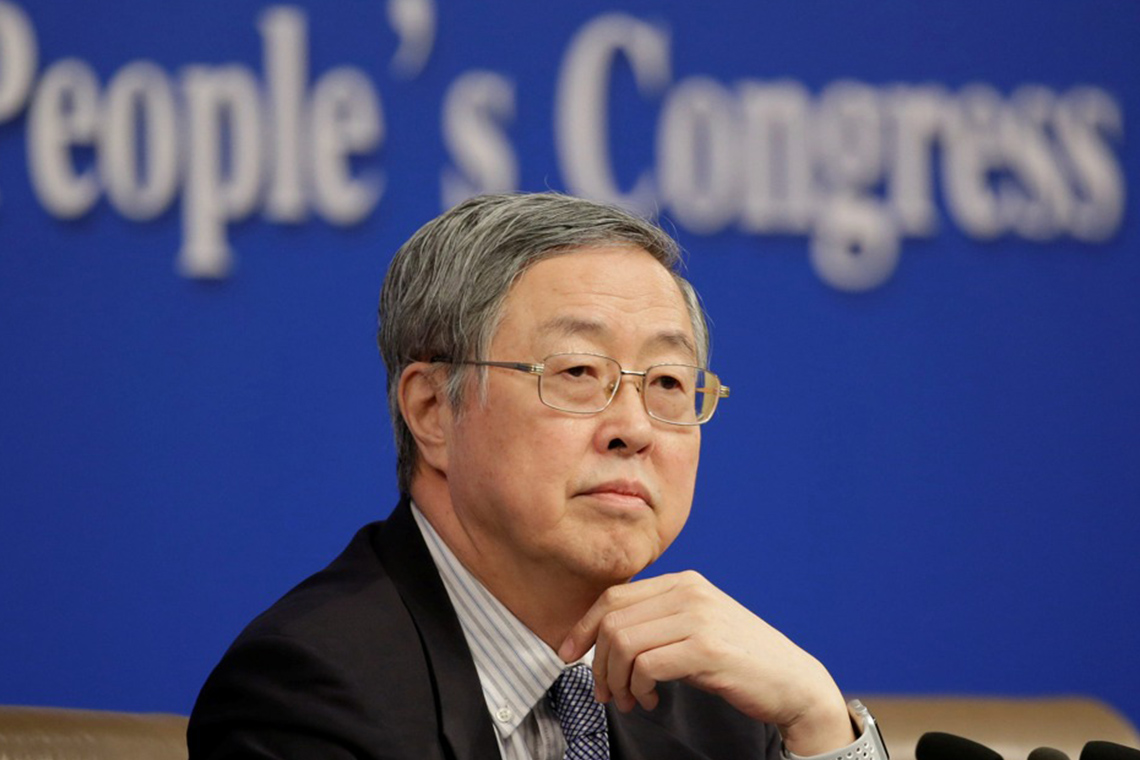
“Financial security is an important part of national security and a key foundation for stable and healthy development, Xi Jinping…told a recent group study attended by members of the Political Bureau of the CPC Central Committee,” according to Xinhua News Agency. On April 26, Bloomberg said that his “comments…signaled China’s policy makers may step up efforts to curb debt and fraud amid a crackdown by regulators.” The next day, the South China Morning Post said that “in an unusual move, President Xi Jinping on Wednesday summoned the country’s finance industry watchdogs and ordered them to take stock of financial risks and uphold regulatory vigilance.” On April 28, central state media heavily promoted an article (in Chinese) titled “When finance is thriving, the economy thrives, when finance is stable, the economy is stable.”
The message from the boss is clear: the risks to China’s economy from its financial system are very real, and they need fixing.
Maps, treaties, and juries
The Standing Committee of the National People’s Congress (NPC) is comprised of about 150 NPC members, and meets every two months to modify legislation and confirm certain political appointments. The most recent meeting concluded Thursday, and Xinhua News Agency has published a summary of results:
- Revisions to a law governing maps and surveying were approved. As we noted on Thursday, the adjustments include a measure requiring “anyone who publishes or distributes national maps” to include Taiwan, along with almost all of the South China Sea, as part of China. Reuters reported that the punishment for breaking the law could be as much as 1 million yuan ($145,000), an amount specifically chosen to “intimidate”. The law also targets “foreigners who carry out surveying work without permission.” Xinhua has published the text of the revised law (in Chinese).
- The Standing Committee “ratified an agreement on border defense cooperation among member states of the Shanghai Cooperation Organization,” and “a treaty on exchange of convicted criminals between China and Tajikistan.”
- The Committee extend the “trial reform of the people’s juror system by a year to increase public participation in legal proceedings.” The pilot program has been rolled out at “50 courts in 10 provincial-level regions, including Beijing, Hebei and Heilongjiang,” and so far has allowed citizen jurors to participate “in the hearings of 11,642 criminal cases, 64,917 civil cases and 5,213 administrative cases.”
Infrastructure porn
The northern city of Tianjin is one of the largest metropolises in China and contains its fair share of impressive infrastructure and dizzying public works projects. Xinhua has published an album of aerial views of highway overpasses in the city.
—Jeremy Goldkorn, Editor in Chief
The first 100 days: Did China tame Trump?
A review, with plenty of links, of Trump’s statements and shifting positions on China during his first 100 days as U.S. president, by Lucas Niewenhuis.
Viral video Friday
From a lucky escape from lightning strikes in Dalian to a dancing grandpa: Watch Jia Guo’s one-minute compilation of the videos that lit up China’s internet over the past week.
This week on The China Project:
- Sinica Podcast: How can we amplify women’s voices on China?
- Video: Five things to know about China’s first homemade aircraft carrier
This week’s news roundups are:
- April 24: A second subdued Xi-Trump phone call
- April 25: The robot Chinese journalists are coming
- April 26: Cross toppler to head China’s police?
- April 27: Will China take over the moon?
This issue of the The China Project newsletter was produced by Sky Canaves, Lucas Niewenhuis, Jia Guo, and Jiayun Feng. More China stories worth your time are curated below, with the most important ones at the top of each section.
BUSINESS AND TECHNOLOGY:
Alibaba’s Yu’e Bao becomes world’s largest money market fund
Yu’e Bao 余额宝, an investment product of Alibaba’s payment affiliate Ant Financial, has surpassed JPMorgan Chase’s U.S. government market fund of $150 billion to become the world’s largest money market fund, reaching a total amount of $165 billion. Launched in 2013, Yu’e Bao, which means “leftover treasures” because it was originally promoted as a way to invest money left over from online payments, now has more than 260 million users. The vast majority of Yu’e Bao users are under the age of 30.
China’s money market fund industry, which is only a decade old, has been growing rapidly, driven by high demand for online funds managed by internet companies such as Alibaba, Tencent, and Baidu, the Financial Times reports (paywall). Unlike traditional banks, which usually offer an interest rate of 0.35 percent a year for an ordinary demand deposit in a savings account, Yu’e Bao (link in Chinese) offers an annualized seven-day yield of 3.96 percent to investors. There’s no minimum amount, and customers can withdraw their cash anytime. The company says that more than 70 percent of individual Yu’e Bao accounts have balances of less than 1,000 yuan ($145) while 15 percent have less than 10,000 yuan ($1,450).
More than 64 percent of the funds that Yu’e Bao invests go into bank deposits, while the rest are short-term investments, policy bank bonds, company bonds, and interbank deposits, according to Caixin.
-
Chinese train maker CRRC’s profits derail in first quarter / Caixin
China’s top train maker, CRRC Corp. Ltd., said that due to a drop in production amid tepid domestic demand for locomotives, both its revenue and profits fell by double digits in the first quarter. -
Meet the Google alum who created China’s Facebook-Groupon mashup / Bloomberg
Colin Huang’s company, Pinduoduo, is a social network for discount shopping worth more than $1.5 billion. -
Top Foxconn executives visit White House, but mum on details / Reuters
“When asked how much money he plans to invest, [Foxconn’s CEO] said he wanted that to be a White House announcement,” likely in the summer or “maybe a few weeks” from now. - BP sells share of SEECO for $1.68 billion / Caixin
- Trump wedge divides India and China / Bloomberg
- U.S. invests too little, not too much in China / Financial Times (paywall)
- New Balance court ruling in China is rare win against piracy / NYT (paywall)
POLITICS AND CURRENT AFFAIRS:
Five corps disbanded in military overhaul
As part of an ongoing revamp of the military, China will reduce the number of corps in the People’s Liberation Army (PLA) from 18 to 13, according to the South China Morning Post.
At a press conference held in Beijing on April 27, Ministry of National Defense spokesman Yang Yujun 杨宇军 explained that the cut is an overall reshaping of the army’s mobile operational unit, a critical step forward in building a strong and modernized army, and shifting the military’s focus from quantity and scale to quality and effectiveness.
The downsizing of the PLA was first announced by President Xi in 2015, with the stated motivation of transforming the military force into a leaner fighting force with new capabilities such as cyberwarfare as well as stronger joint operations capability.
-
U.S. says ‘major conflict’ with North Korea possible, China warns of escalation / Reuters
Trump told Reuters on Thursday that he wanted to solve the conflict with North Korea peacefully, possibly with new economic sanctions, although a military option is not completely off the table. Chinese Foreign Minister Wang Yi 王毅 said the situation on the Korean peninsula could escalate or slip out of control. -
Trump spurns Taiwan president’s suggestion of another phone call / Reuters
Trump refused to make another phone call with Taiwanese president Tsai Ing-wen, saying that he didn’t want to cause troubles for China as Beijing appears to be helping to rein in North Korea. -
China reveals foreign addresses of corruption suspects living in Canada, U.S. and beyond / SCMP
“The five Canadian addresses are all in British Columbia, four are in the New Zealand city of Auckland and 10 are scattered across the United States.” - China to begin construction of manned space station in 2019 / Reuters
- China convicts rights lawyer Li Heping of ‘subversion of state power’ / The Guardian
- Thwarted by China’s courts, ‘diehard’ lawyers ‘fight to the death’ for justice / The Globe and Mail
SOCIETY AND CULTURE:
A classical Chinese garden in the heart of Washington
A 12-acre field at the U.S. National Arboretum, two miles away from the U.S. Capitol, will be transformed into a Chinese garden with all the elements of a traditional Chinese landscape by the end of this decade, the Washington Post reports.
The lavish garden will feature peonies, a large central lake, and grand pavilions, most of which will be re-creations of historic gardens in Yangzhou, a city in Jiangsu along the Yangtze River built by wealthy merchants during the Qing dynasty (1644–1912). To be named the National China Garden, the project has long been a dream of Chinese-American leaders in the United States, but it was not until China agreed to cover the entire bill of $100 million that the project was greenlighted.
When the panda Bao Bao returned to China four years after her birth at the National Zoo in Washington, D.C., the need for a symbol of cultural exchange became especially evident. “The Chinese don’t have anything in Washington to put to use,” said Tom Elias, a former director of the arboretum and an early advocate of the garden project.
- New scrutiny for Confucius Institutes / Inside Higher Ed
- China’s new approach to beating poverty / The Economist (paywall)
- Wealthy Chinese scramble for imperiled commodity: U.S. ‘golden visa’ / NYT (paywall)
- Documentary depicts ‘cultural assimilation’ of Tibetan students in coastal China / Asia Society
- Chinese film added to Cannes competition after conspicuous absence / China Film Insider
- Book review: In the last days of old Shanghai / LARB Blog