AAPI Philanthropic Leadership: Rising Above Hate
“Those of us with the capacity to give have an opportunity to really consider how to sustainably support organizations that serve vulnerable AAPIs and also how to do that in a cross-racial way,” says Vivian Long, Executive Director at Long Family Foundation.
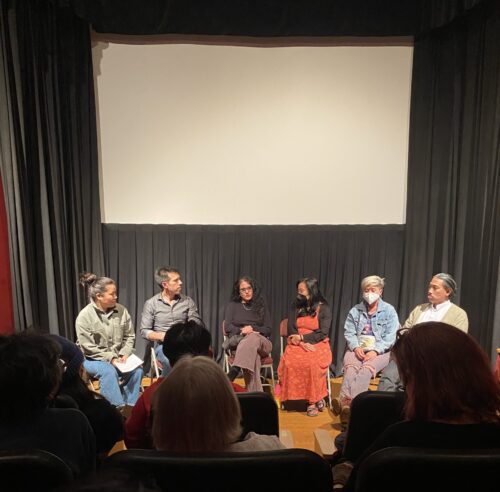
We’re providing highlights from an April 14th fireside chat with Vivian Long, Executive Director at Long Family Foundation, and Diana Mao, President and Co-Founder of Nomi Network, on progressive approaches to philanthropy and social impact during times of increased AAPI hate. You can watch the full discussion with Richard Lui, News Anchor at MSNBC and NBC News, and Patricia Sun, CEO of JLIN Marketing here. (Interviews have been edited for clarity and length).
Diana Mao: The Long Family Foundation focuses on research and funding of Asian American causes. Can you speak to the disparities within the Asian American community that complicate the model minority label?
Vivian Long: One thing we hear consistently from researchers is that AAPI communities are notoriously difficult to survey because there’s so much disparity within. One study on the wage gap for AAPI women found that while the wage gap between Chinese and Indian women and white men was very small or non-existent, most other AAPI women were paid significantly less than this. Another was looking at AAPI media and the way that Asian headlines are portrayed to focus on issues like education or affirmative action instead of poverty and homelessness which still disproportionately affect our community. It’s so important to have strong research and data disaggregation to make sure we’re telling that full story.
Diana: How do you think that the model minority myth or Asian-American self identity in general has affected how AAPI have related to the plight of other racial groups in the U.S.?
Vivian: Part of the history of the AAPI community is distancing ourselves from the struggles of other communities of color, and I think some of that is a perceived competition for resources. One is the lack of funding that the AAPI community receives. The Asian Americans/Pacific Islanders in Philanthropy (AAPIP) released a study that showed how sparse funding is for AAPI non-profits. In 2018, for every $100 of foundation funding distributed, only 20 cents was allocated to AAPIs, representing 0.2% of all funding. Those of us with the capacity to give have an opportunity to really consider how to sustainably support organizations that serve vulnerable AAPIs and also how to do that in a cross-racial way.
Diana: How do you think AAPI giving habits have changed over the past few decades? Can you talk a little bit about your family’s intergenerational approach and how you would tie these giving habits to evolving Asian American identity in the United States?
Vivian: In 2017, we decided to make the AAPI community a priority for the foundation. I didn’t know as much as I should have about the AAPI community and nonprofits prior to then, and it was only through conversations with other organizations that we developed our foundation’s approach to partnership, which is really led by listening to the leaders with demonstrated experience and to build trusted relationships with them. AAPI capacity building and community building is just one of our five areas of focus. We have four other areas of focus and we really try to tailor our approach to each of those areas based on what we’re seeing.
In the Asian American space, one thing we’ve really identified is the need for more capacity building and leadership development. There is a lack of sophisticated financial controls, minimal succession planning, really burnt out leaders, and an insufficient talent pipeline. And these are all operational necessities for any healthy organization to run and be sustainable, but they’re rarely funded and therefore can’t be prioritized. The Long Family Foundation is not poised to take on this entire challenge. And so we know we need to build a much stronger philanthropic movement of Asian American philanthropists and mainstream philanthropists that are going to give back to the community.
Diana: How can we encourage our colleagues to join together and centralize this effort, especially to make sure this moment becomes a sustainable movement?
Vivian: I would encourage everyone to think about what a commitment to the AAPI community looks like for you. For me, it’s not just about responding in this immediate moment where there’s a surge in violence and hate crimes. The reality is that most of our AAPI non-profits have been operating for decades, if not longer, and will need to operate for decades to come. One thing I’ve really seen in the AAPI community is a scarcity mentality. So whether you’re volunteering or funding, how can you go beyond a one-time commitment to enable an organization to adequately plan for the future and the people it needs to serve? For philanthropists, I would encourage us to talk to each other about the sustainable commitments that we’re individually making and then figure out how to not be so protective. The reality is that, though we’re funding different organizations, some of the principles may be the same. How do we share in that and make each other more effective?
Diana: What advice would you give to next gen donors who wish to have conversations with their families and shifting funding priorities to focus on AAPI organizations and movements?
Vivian: Start having these conversations, not with the lens of funding, but just as issues that are important to discuss as a family. There is a lot to unpack about our ancestors, first-generation immigrants to the U.S. and the way they were able to, or not, process their own heritage and identity as they were assimilating to a new one. Those conversations with family are powerful and can illuminate what it is about the AAPI community or where you want to give that ties back to who you are. Philanthropy is so personal, especially at the family level. For 95% of family foundations, there is that connection back to what you feel passionate about. As you start to unpack that, it will become clear why it resonates with you, which organizations are doing interesting work, and how you want to approach funding.
*
Want to learn more? The Serica Initiative’s China Philanthropy & Nonprofit Newsletter is a monthly deep-dive into the trends, major players, and regulatory environment for philanthropic and nonprofit activity between the U.S. and China. Subscribe to the newsletter here.