World’s first cloned monkeys born in China
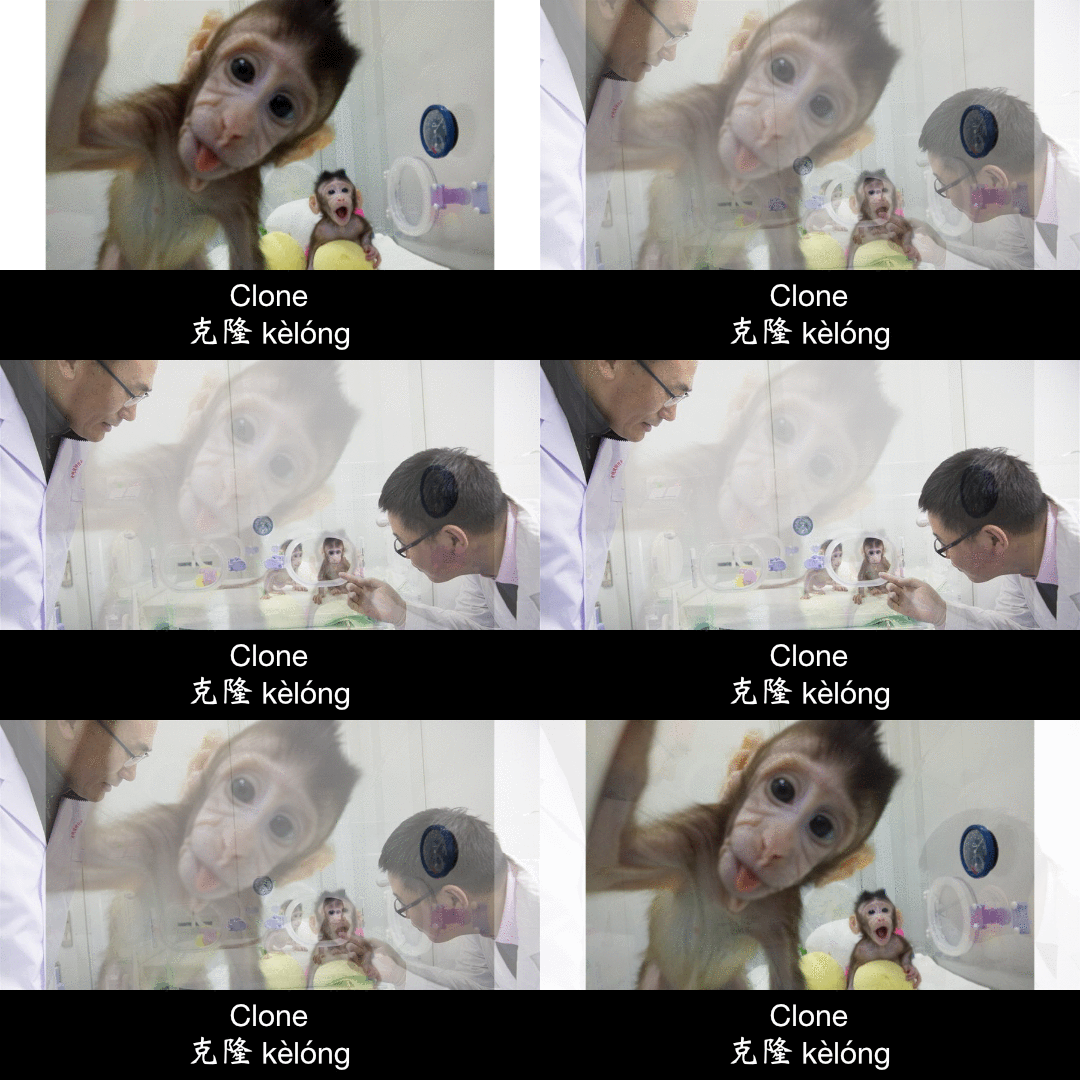
Researchers at the Chinese Academy of Sciences Institute of Neuroscience announced that they have successfully cloned two monkeys. Xinhua News Agency reports that long-tailed macaque Zhong Zhong 中中 was born on November 27 last year, followed 10 days later by an identical twin named Hua Hua 华华. You can see a photo gallery of the monkeys here. The BBC reports that the monkeys were cloned using the same technique that led to the birth of Dolly the cloned sheep in Scotland 20 years ago.
More cloned monkeys are on the way, according to one of the researchers. Because they are primates, they will be useful to study humans diseases with a genetic component, including some cancers.
The Chinese scientists’ work “is not a stepping-stone to establishing methods for obtaining live born human clones,” according to one specialist who spoke to the BBC. But the article notes that cloning primates brings the world “closer to human cloning,” which raises ethical concerns.
There is a different context and approach to ethics in biotech, pharma, and healthcare in China. In fields such as cloning and gene editing, this, along with a huge population, might give the country’s scientists the edge over their peers in the West. Evidence that this is already happening? Two relevant headlines from Caixin:
- Investment manager sees more Chinese biotech listings coming to Hong Kong
- AI-powered drug developer nets $15 million from Google, Tencent
New podcast from Women and Gender in China
WAGIC, a website that “aims to provide a dedicated and accessible space for commentary about all aspects of gender, sexuality and feminism(s) in China,” has launched a podcast. Check out the first episode: What is a ‘Chinese woman artist’?