News roundup: Why did Trump send Xi Jinping a letter?
Top China news for February 9, 2017. Get this daily digest delivered to your inbox by signing up at supchina.com/subscribe.
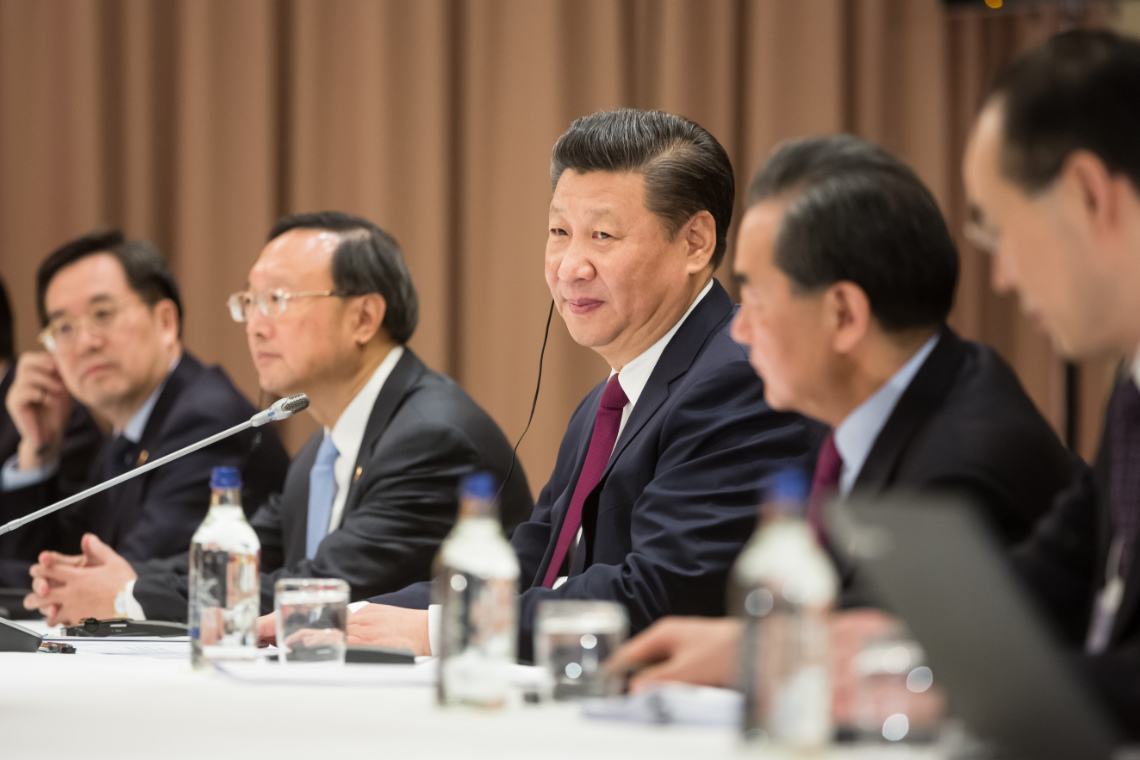
Trump sends conciliatory letter to Xi Jinping, but no phone call
Since his inauguration, U.S. President Trump has met or spoken on the phone with 18 foreign heads of state, but not China’s. His failure to send a message of greetings for Chinese New Year was a popular subject of discussion on Chinese social media. However, on the evening of February 8, the White House said that Trump had “provided a letter to President Xi Jinping,” thanking him for his congratulatory letter on Trump’s inauguration and sending good wishes to “the Chinese people” for the Lantern Festival and the Year of the Rooster. The letter also states that Trump wants to “develop a constructive relationship that benefits both the United States and China,” a notable change in rhetoric from Trump’s China-bashing throughout his campaign for election.
Why a letter and not a phone call? Perhaps it’s not a snub, but a rare case of the Trump administration engaging in careful consideration before it acts. Reuters reports that “diplomatic sources in Beijing say China has been nervous about Xi being left humiliated in the event a call with Trump goes wrong and the details are leaked to the U.S. media.” After news of the letter was announced, official comments from both countries consisted of remarkably similar bromides. A Chinese foreign ministry spokesman said that “China attaches great importance to developing the relationship with the United States,” while the White House press secretary said that Trump “obviously wants to do what he can to have a fruitful and constructive relationship with China.”
According to Reuters, the foreign ministry in Beijing said last week that the two countries were engaged in frequent contact, “led by China’s top diplomat, State Councillor Yang Jiechi, who outranks the foreign minister.” Bloomberg notes the appearance of Trump’s daughter and granddaughter at a Chinese New Year celebration at the Chinese Embassy in Washington, D.C., and says that Trump’s son-in-law and adviser Jared Kushner has been having “an extensive ongoing dialogue that has been positive with Ambassador Cui Tiankai.”
Mari-Cha Lion exhibition in Hong Kong
Asia Society, our featured partner this week, has a fascinating cross-cultural art exhibition in Hong Kong running until February 19. The centerpiece is the Mari-Cha Lion, a rare mid-11th- to mid-12th-century South Italian bronze sculpture bearing Arabic decorations, on show together with a selection of Asian objects from the Mr. and Mrs. John D. Rockefeller 3rd Collection and other private collections, as well as contemporary artworks by seven Asian artists. Click here for details.
Are China’s youth becoming less nationalistic?
The South China Morning Post and Foreign Policy have both published articles about a research paper by Harvard professor Alastair Iain Johnston, which suggests that young Chinese people have become dramatically less nationalistic during the period from 2002 to 2015. If you’re interested in this subject, you should also read Eric Fish’s essay at ChinaFile that asks “Why is Beijing so worried about Western values infecting China’s youth?” Finally, it’s worth considering whether much of this discussion suffers from geographical bias: A blog called Chinese Politics from the Provinces asks, “When did some students in Beijing start being indicators of political sentiment in China?”
—Jeremy Goldkorn, Editor in Chief
Today on The China Project
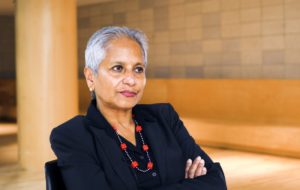
An interview with Susan Shirk — a giant among China watchers, with a distinguished career both in diplomacy and in academia — discusses Chinese leaders’ views of themselves and their fears of Trump.
This issue of the The China Project newsletter was produced by Sky Canaves, Lucas Niewenhuis, and Jiayun Feng. More China stories worth your time are curated below, with the most important ones at the top of each section.
BUSINESS AND TECHNOLOGY:
-
TMD is the new BAT / TechNode
Baidu, Alibaba, and Tencent, often collectively known under the acronym “BAT,” are the three big internet giants in China that have long dominated the industry. But there are some newer companies encroaching on the big three. This article points to Toutiao, Meituan, and Didi Chuxing as taking the lead. Toutiao, which means “headlines” in Chinese, is a popular news aggregation app that uses artificial intelligence to tailor news feeds for each of its 700 million users. Meituan-Dianping, a merger of two dominant e-commerce platforms, claimed 170 million yuan in gross merchandise volume last year and just stepped into the online banking industry last month. Didi Chuxing is the dominant domestic ride-hailing app that acquired Uber’s China business last year. -
Chinese companies rush in with nearly $2 trillion where bankers fear to lend / WSJ (paywall)
In 2016, company-to-company loans in China surged by 20 percent to 13.2 trillion yuan, becoming the fastest-growing sector of the Chinese shadow banking system, but also posing pressing risks for China’s economy. Shadow banking refers to financial transactions undertaken through lending by unregulated institutions. Company-to-company lending usually takes place in sectors such as mining and property, where regulators have repeatedly tried to cut off excess capacity. Lending is conducted with only cursory checks on borrowers’ creditworthiness. This type of lending is also adding to China’s $18 trillion corporate debt pile, equivalent to about 169 percent of gross domestic product.
- Hollywood seeks new business terms with China / WSJ (paywall)
- Trump threatens Hollywood’s growth in China / Bloomberg
- China tells bitcoin exchange to follow forex rules / MarketWatch
- China turns to precision medicine in fight against cancer / Bloomberg
- After garlic crush, China farmers singed by red-hot chili market / Reuters
POLITICS AND CURRENT AFFAIRS:
-
China’s nuclear missile policy put under strain by U.S. plan / CNBC
For years, China has been regarded as a relatively modest bystander in nuclear policy in comparison with the U.S. and Russia, which have spent hundreds of billions of dollars modernizing their thousands of nuclear weapons. Mainstream analyses to that effect, emphasizing China’s continuing “no-first-use” policy for its 200-300 warheads, have been published in recent years and even in recent weeks. But on the flip side, a number of opinions have been published recently that see a more aggressive nuclear policy in China’s future. These include one published on Tuesday, which pointed to China’s new missiles as evidence, and the one linked on the headline above, which points to America’s plans for new missiles as part of its evidence. -
Beijing to hold events marking Taiwan massacre, but some see ulterior motive / SCMP
The February 28 Incident of 1947, also known as “2.28,” was a massacre of thousands of Taiwanese during early authoritarian Kuomintang rule of the island, in response to a widespread uprising. The event, which was followed by nearly 40 years of martial law, is still a flashpoint between native Taiwanese and those who originally came to the island with the Kuomintang in the last years of the Chinese civil war. Many in Taiwan reference the event — and their government’s transition to democracy since that low point — to argue for the island’s independence, and see the mainland’s plans to commemorate the massacre as highly inappropriate. Beijing, nonetheless, is making these plans as part of an effort to mend ties with the island following the election last year of Taiwan’s president, Tsai Ing-wen, an independence-leaning politician.
- China jails former chief of state-owned automaker FAW for graft / Reuters
- The domestic hazards in China’s diplomacy / The Diplomat
- Trickle-down censorship in China: An interview with JFK Miller / LARB Blog
- China to start fingerprinting foreign visitors / Washington Post
- Branstad looking for ‘win-win’ in China / The Gazette (Iowa)
SOCIETY AND CULTURE:
-
At least five infected with HIV after dirty needles used at Chinese hospital / SCMP
At least five patients at a Hangzhou hospital are reported to be infected with HIV as a result of needle reuse. According to a government statement (in Chinese) released by the Health and Family Planning Commission of Zhejiang Province on Thursday, the “serious medical accident” occurred at the Zhejiang Provincial Hospital of Traditional Chinese Medicine and was first reported to the local government on January 26. The investigation carried out by health authorities found that a HIV-positive patient who had contracted the virus outside the hospital during his treatment is believed to be the contamination source. After a technician violated the standard procedure of “using a new needle for each injection,” the virus accidentally spread to five other patients. But the statement does not disclose more detailed information regarding the accident, such as how many other patients have been exposed to the virus or what the treatment was for. -
Video app highlights growing divide in China / WSJ (paywall)
Kwai, China’s most popular short-video platform with 400 million registered users, offers a glimpse of the country’s widening socioeconomic gap. While cosmopolitan China used to decide what’s popular for the rest of the country and is enjoying more sophisticated entertainment, the countryside is still stuck in the developing world. “Kwai provides a medium for those in that less-developed part of the country to share what they find relevant and amusing. Many other user-generated video apps frequently showcase attractive women and the lifestyles of the new middle class. Kwai users, by contrast, often show themselves roaming farm fields or standing in front of shabby-looking buildings,” Li Yuan writes.
- China’s transgender Oprah – As an army colonel who became a woman, she exemplifies a society in flux / The Economist (paywall)
- ‘Bureaucracy hindering efforts to maintain Forbidden City’ – Palace Museum says residency requirements should be eased to make it easier to recruit specialized craftsmen / SCMP
- Resistance to ‘last-resort’ antibiotic spreads from farms in China / Financial Times (paywall)
- China’s roads and workplaces seem to be getting less lethal / The Economist (paywall)
- China should allow three or more children: top demographer / Bloomberg
Our Partner