An underwhelming trade deal forms
Business & Technology
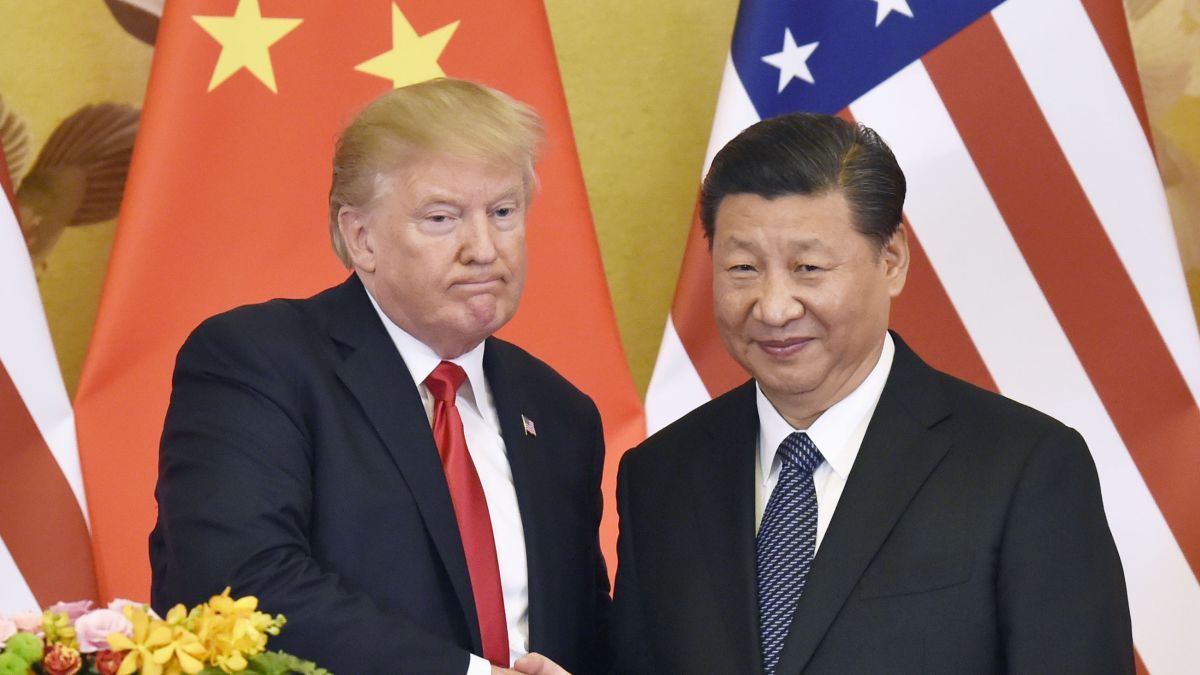
The New York Times and Wall Street Journal both reported over the weekend that a U.S.-China trade deal is forming. The WSJ added that the expected Mar-a-Lago summit to seal the deal will happen “probably around March 27, after Mr. Xi finishes a trip to Italy and France.”
- The NYT says the deal would “largely require Beijing to make big purchases of American agricultural and energy goods and to lower some barriers that prevent American companies from operating in China. In return, the United States would most likely drop its tariffs on at least $200 billion of the $250 billion worth of Chinese imports currently subject to American levies.”
- But “early details indicate it would do little to substantively change the way China has long done business and would not force Beijing to curtail cybertheft or the subsidies that the administration complains create an uneven playing field for American companies.”
- The focus of the agreement is, unsurprisingly, on the bilateral trade balance, which the WSJ calls “a tactic designed to appeal to President Trump, who campaigned on closing the bilateral trade deficit with China.” The products that China is gearing up to buy more of to please Trump include:
- Cars: China is “speeding up the timetable for removing foreign-ownership limitations on car ventures and reducing tariffs on imported vehicles to below the current auto tariff of 15%.”
- Natural gas: “China’s state-owned China Petroleum & Chemical Corp., known as Sinopec, would agree to buy $18 billion of liquefied natural gas from Cheniere.”
- Ethanol, currently hit with a 70 percent tariff at the Chinese border.
- Dried distillers grains, an ethanol byproduct “used to feed cattle.”
- Polysilicon, a “raw material in solar panels that was hit with 57% tariffs as part of an earlier trade fight with China.”
- “Soybeans and other agricultural goods.”
Separate from the trade agreement, Beijing is attempting to address some American complaints about foreign investment and technology transfer with a new foreign investment law. A draft version of the legislation was revealed last December, and the National People’s Congress is expected to vote on a revised version at the end of next week.
- But this, too, is underwhelming in the eyes of American and European business groups. The New York Times (porous paywall), summarizing the reaction, states that “the new law is made up of many single-sentence pronouncements on complex issues, with no details on how those rules would be carried out.”
More trade-related links for today:
- Beijing’s resistance to changing state planning and state subsidies
Easier for China to face tariffs than bend to U.S. pressure / Reuters
“Xi, who fundamentally believes in a strong role for the state and the ruling Communist Party in the economy, does not want to, and cannot, quickly dismantle decades of state planning, political analysts say.”
China is blocking World Bank report calling for changes in economy / Washington Post
“China has delayed the publication of a report on its economy, written in conjunction with the World Bank, as it tries to tone down recommendations about reforming its state-owned enterprises and allowing more market-led principles to reign.” - Trump tweets from March 1
Donald J. Trump on Twitter: “I have asked China to immediately remove all Tariffs on our agricultural products (including beef, pork, etc.) based on the fact that we are moving along nicely with Trade discussions….”
Donald J. Trump on Twitter: “….and I did not increase their second traunch of Tariffs to 25% on March 1st. This is very important for our great farmers — and me!” - Stock market reaction
Stocks rally as U.S., China inch closer to trade deal / Reuters - America First, Allies Second
Trump’s ‘historic’ China deal could be a bit of a horror for us / Sydney Morning Herald
Trump’s China Deal Could Punish U.S. Allies / WSJ (paywall)
China boosting its purchases of American goods would mean “a big hit to other major exporting nations,” many of whom are U.S. allies. - China’s economy: More purchasing power, but same economic power gap with U.S.
Simon Rabinovitch on Twitter: “Here’s an updated chart comparing the economies of the US and China at prevailing exchange rates. After rapidly catching up from 2005 to 2013, China has barely closed the gap since then. Its GDP last year was $6.9trn smaller.”