‘Re-education’ camps in Xinjiang — new leaks directly contradict government propaganda
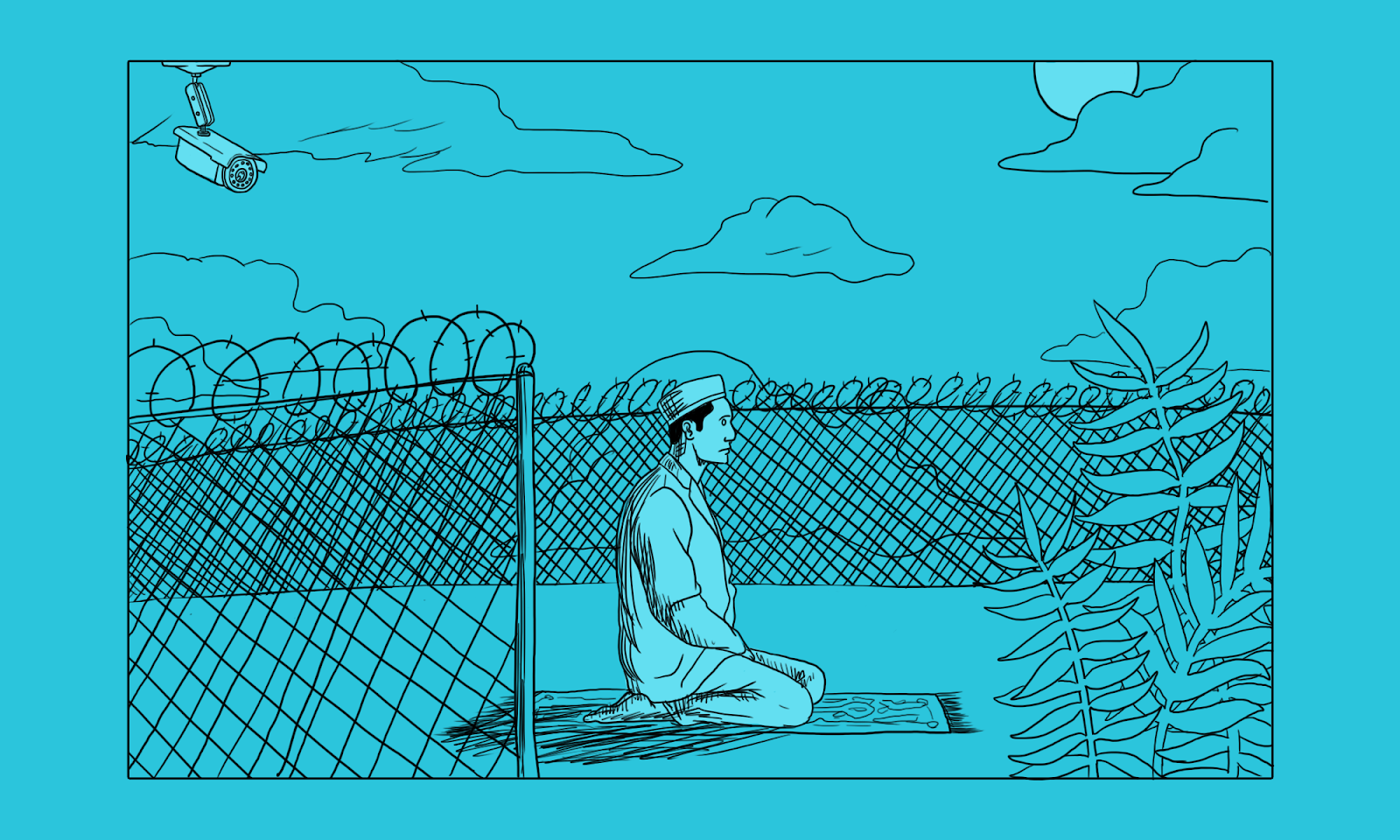
The China Project illustration by Derek Zheng
A new leak of a Chinese government document — dubbed the “Karakax list” — was published last week by several media organizations. It revealed further details of the government’s vast system of surveillance and its detention of Muslims in Xinjiang, showing the largely arbitrary criteria officials use to determine whether detainees can be released from the “re-education” camps.
Like the two previous leaks, to the New York Times and the International Consortium of Investigative Journalists (ICIJ), the Karakax list confirms the culturally abusive nature of policing and detention in Xinjiang, and contradicts claims by Chinese authorities that the “re-education” facilities are targeted at rooting out “separatism” or “extremism.”
The new document shows 311 case files from Karakax (a.k.a. Qaraqash) County in southwestern Xinjiang, where 98% of the residents identify as Uyghur, a mostly Muslim ethnic minority. The Financial Times, one of more than a dozen outlets that was shown the Karakax list ahead of its publication, verified its authenticity and explains what it shows us (paywall):
The Karakax list’s most commonly cited reason for interning members of minority communities is violation of family planning policies — China’s strict rules governing the number of children each family can have.
Being a practicing Muslim is the second most common reason. Possession of “illegal” religious videos or books can result in imprisonment, as well as going on hajj — the pilgrimage to Mecca — wearing a veil or closing a restaurant during Ramadan.
What is the significance of the document?
Abduweli Ayup, a Norway-based Uyghur activist who has been verifying names and details in the Karakax list, is quoted in the Wall Street Journal (paywall):
This document is really important because it tells us the reality… In the document, there are only three cases related to separatism.
For more on the Karakax list, see this Twitter thread and academic paper by scholar Adrian Zenz, or these reports: