A small victory for rule of law?
Announcements for Access members:
—Jeremy Goldkorn and team
1. Prosecutors charged for torture — a small victory for rule of law?
Lucy Hornby of the Financial Times reports (paywall) that nine government prosecutors “faced a Chinese court on Friday over the death during the alleged torture of a Hong Kong-based businessman, in a rare instance where China’s much-feared interrogators have themselves faced the threat of punishment.”
-
Lau Hei-wing 刘希泳, the owner of the Kimberly Hotel in Hong Kong, died in March 2017 after 80 hours of sleep deprivation and torture, according to an indictment by the Tianjin No. 1 Intermediate Court.
-
Lau became famous in Hong Kong for helping billionaire widow Nina “Little Sweetie” Wang 龚如心 fight her father-in-law for her late husband’s fortune.
-
News of Lau’s death was first reported in the Hong Kong press in April 2017, when he failed to attend a criminal trial — he was accused of defrauding the Industrial and Commercial Bank of China (Asia) of HKD200 million ($25.5 million) in loans. Last year, Lau’s lawyers said that he may have been murdered. I have not yet been able to find the first reports that he was in official custody in China.
-
In the trial of his prosecutors, eight were charged with “extorting a confession by torture” (刑讯逼供 xíngxùn bīgòng), a crime in China. Two of the prosecutors were accused of “intentional injury,” which can carry the death penalty. The indictment does not give a reason for Lau’s interrogation.
-
The indictment describes the torture: The prosecutors are alleged to have blindfolded Lau, and tied him to an interrogation chair, with his bound legs raised in front of him, his mouth taped shut, and a toilet plunger covering his nose. The torturers also stabbed his feet with keys, and “‘folded’ Lau’s upper body toward his legs multiple times until he ‘went limp and lost consciousness.’”
-
“In 2010, Chinese courts were barred from accepting testimony extracted under torture,” the FT notes. “However, a new law this year put the civil court system back under the direct authority of the Communist party’s anti-corruption watchdog, which has unlimited power to investigate and detain anyone involved in a corruption case.”
I’m inclined to see this as good news, a small victory for rule of law. A Baidu news search for Lau’s name reveals that the last time he was mentioned in P.R.C. media was 2015, so the authorities are certainly not championing this case in any way, but I am not going to let that get in the way of a tiny sliver of optimism this story has brought into my worldview.
2. The Belt and Road show must go on
Today is a big Belt and Road day in state media: “Xi congratulates on opening of forum on 5th anniversary of Belt and Road Initiative” is Xinhua News Agency’s top story in Chinese and English.
Naturally, such an important anniversary must have a theme song, and the new Belt and Road ditty is ripped off from an old Coca-Cola advertisement. Quartz has transcribed the lyrics of “I’d like to build the world a road,” and explained its relation to the 1971 ad jingle “I’d like to buy the world a Coke.”
A word of warning, before you click through to the Belt and Road song: Wall Street Journal reporter Chun Han Wong 王春翰 tweeted:
“Another year, another “Belt and Road” music video you can neither unsee nor unhear.”
3. The long hand of censorship reaches for South African throats
Irishman Sir Anthony Joseph Francis O’Reilly, AO, usually just Tony O’Reilly, played rugby for Ireland and the British Lions, and was chief executive of H.J. Heinz — of baked beans and ketchup fame — from 1979 until 1998. Even during his time at Heinz, O’Reilly was a significant shareholder in Independent News & Media, a Dublin-based print media company.
After O’Reilly left Heinz, Independent News & Media became one of his major business pursuits, and he led the company’s expansion into South Africa, buying up local titles and launching a South African edition of The Independent newspaper, and later an online news portal. In 2013, The Independent’s South African operations were sold to Sekunjalo Investments, a successful private equity firm founded in 1996 with the goal of investing and assisting companies owned by black South Africans.
In 2014, two state-owned Chinese companies bought a 20 percent share in Independent Media (South Africa), worth 400 million South African rand, about 36 million U.S. dollars at the time. The two companies are China International Television Corporation, a subsidiary of central state broadcaster CCTV, and the China-Africa Development Fund. They set up a shell company in Mauritius named Interacom Investment Holdings Limited, which owns the stake in Independent Media.
Yesterday, Azad Essa, a freelance journalist who — until recently — wrote columns for Independent Online South Africa, posted the following to Facebook:
I have been writing a foreign affairs column for Independent Media for the past 2 years. I have focused on neglected issues around the globe, zooming in on race, immigration, poverty, and prejudice.
This week I wrote about how Chinese authorities are holding more than 1 million Uyghur Muslims in internment camps in the Xinjiang province.
I was fully aware that China International Television Corporation (CITVC ) and China-Africa Development Fund (CADFUND) have a stake in Independent Media and that the column might ruffle feathers.
But the piece was published in print in newspapers around the country on Wednesday. When I enquired when the piece would go up online, I received a mail saying “a decision has been made not to publish it online.”
When I asked for clarity from online editors, I received no response.
This morning my weekly column was canceled. I was told the following:
“With the redesign of our papers and the new system, there are changes regarding the columnists being used.”
Is this the future of corporate censorship in SA?
And is this where the continent’s future relationship with China is headed?
What happened? It may have been self-censorship, a decision by the senior management of Independent Media. Naspers, Africa’s largest media company — most of whose value consists of its 31.2 percent stake in internet Chinese behemoth Tencent — has taught its South African competitors the value of a good relationship with the Chinese government. But just as likely: Someone at the Chinese embassy in South Africa saw Essa’s column in a newspaper, and put in a call to whoever manages the investments of the Mauritius shell company, who put in a call to someone on the board of Independent Media.
As the foreign ministry continues to make life difficult for foreign correspondents in China — in August, we learned of the de facto expulsion of BuzzFeed journalist Megha Rajagopalan — Chinese embassies abroad are also becoming increasingly aggressive in attacking journalism that makes Beijing uncomfortable.
Swedish journalist Jojje Olsson was the subject of smear attacks by the Chinese embassy in Stockholm after he wrote stories about detained Hong Kong bookseller Gui Minhai 桂敏海. In an article in the Taiwan Sentinel, Olsson says:
The new Chinese ambassador to Sweden is much more active than his predecessor. Through disinformation campaigns and attacks on Swedish media, the Chinese envoy has attempted to change the narrative on issues ranging from Gui Minhai to Taiwan. This pattern has also been observed in other countries.
I suspect such aggressive tactics will backfire in many countries: There’s nothing worse than making journalists angry if you want good press. But if you’re in a country or at a media company where Chinese capital plays a big role, get used to the feeling of Beijing’s long icy hand around your throat.
—Jeremy Goldkorn
4. Trade war, day 64: $200 billion in tariffs ‘very soon,’ and ‘another $267 billion ready to go,’ Trump says
On July 20, a little over two weeks after the opening shots of the trade war, Donald Trump declared he was already “ready to go to 500,” referring to an escalation of tariffs to cover the $505 billion total value of goods that the U.S. imports from China.
Today, Trump repeated that threat, but with more specific numbers. Reuters reports:
-
“The $200 billion…could take place very soon depending on what happens with them,” Trump told reporters.
-
“Behind that is another $267 billion ready to go on short notice if I want. That changes the equation,” he added.
-
The math here is a little fuzzy — the Washington Post says it can’t figure out exactly where the $267 billion figure came from, as it doesn’t add up to either the $505 billion in Chinese goods imported last year, or the $548 billion or so expected to be imported this year — but the message that Trump is sending is clear.
-
“Trump wants to just tariff the hell out of China,” TechCrunch wrote, succinctly summarizing that message.
-
“U.S. stocks erased gains after Trump’s remarks, with the S&P 500 Index falling by 0.3 percent to the lowest in two weeks by 1:26 p.m. in New York,” Bloomberg reports (paywall).
-
“Very soon” might actually mean three weeks, the Wall Street Journal points out (paywall): some people “familiar with the deliberations think that the Office of U.S. Trade Representative Robert Lighthizer will take weeks to make a move to demonstrate that it carefully considered the [public] comments, numbering more than 4,000. The office took three weeks after the end of the first comment period to announce tariffs.”
-
Quartz has a roundup of those public comments, which concludes, “Over and over again, many US businesses echoed a common refrain: Nobody does what we need better than China.”
Large American tech companies are protesting the tariffs:
-
Apple sent a letter (read in full here) to the U.S. Trade Representative, arguing, “It is difficult to see how tariffs that hurt U.S. companies and U.S. consumers will advance the Government’s objectives with respect to China’s technology policies…We hope, instead, that you will reconsider these measures and work to find other, more effective solutions that leave the U.S. economy and U.S. consumer stronger and healthier than ever before.”
-
The letter also pointed out the obvious fact that “because all tariffs ultimately show up as a tax on U.S. consumers, they will increase the cost of Apple products,” and named specific affected products, including the Apple Watch, Airpods, HomePod, and adapters and chargers.
-
“Apple shares shed 1 percent just before market close Friday, after gaining as much as 1 percent earlier in the session. Shares of Apple suppliers Qualcomm, Skyworks and Cirrus Logic also dipped,” CNBC reports.
-
Intel, Cisco Systems, and Dell Technologies all also protested, but focused on how the tariffs could slow progress on 5G telecoms technology — a priority for the Trump administration, the Wall Street Journal reports (paywall).
-
Intel said that by raising the prices for inputs to 5G, the tariffs “will slow down the pace of technology adoption across the U.S. economy, causing American firms and institutions to fall behind foreign competitors outside of China that aren’t subject to the same tariffs.”
But the Trump administration is forging ahead on its efforts to apply pressure to China:
-
“The prospect of resolving the U.S. trade battle with China is fading,” the Wall Street Journal writes (paywall), in part because trade tensions seem to be easing with Canada, Mexico, and the EU.
-
The more-focused attention on China “blunts criticism from Congress and U.S. industry that the administration has erred by picking fights with friendly countries at the same time as it battles with China,” the Journal says.
-
Less friction with allies also helps the U.S. recruit them “to stop Chinese exporters from skirting U.S. tariffs by shipping goods to third countries, which then send the goods to the U.S.,” officials told the Journal.
-
The new U.S. ambassador to the EU, Gordon Sondland, is reaching out to Europe for help in pressuring China: “I see real opportunities for the transatlantic relationship to be a force that curtails Chinese economic aggression and unfair trade practices,” he said, according to Reuters.
-
Two prominent economists are predicting an extremely protracted clash between the U.S. and China:
-
“I think we could see two more years of serious tension in the U.S.-China trade relationship,” Derek Scissors, Asia economist at the American Enterprise Institute, told CNBC.
-
“Right now, at this point, there is no exit strategy for either side,” Stephen Roach, former chairman of Morgan Stanley Asia, said at a conference in Hong Kong, the SCMP says.
-
“It could be a new cold war because the US is after containing the biggest threat that it faces as a global power, which is China,” Roach said, adding that the trade war is “a convenient excuse for ducking the tough issues of economic strategy that the US has avoided for decades.”
-
Other trade war and related news:
-
Sentiment risk, even if direct tariff impact is small?
Ex-PBOC’s Zhou sees sentiment risk from China-U.S. trade war / Bloomberg (paywall)
“People may become nervous. Nobody really knows. Suddenly there is a trade war. They may change their mind in terms of stock market investment,” said former central bank governor Zhou Xiaochuan. -
China works to relieve domestic trade war pain
China to increase export tax rebates on 397 products / Reuters
Amid trade row, China to allow soybean imports from Ethiopia / Reuters
Premier hopes US firms will boost China investment: state TV / Reuters
Beijing attempts to soothe small businesses’ social tax fears as trade war dims growth outlook / SCMP -
Currency
Yuan outperforms peers as China deters bears before tariffs / Bloomberg (paywall) -
Some perspective
China — from vast market to enemy No. 1 / Japan Times
“As recently as 2016, Barack Obama argued that a weak China that could not contribute to solving global problems was more dangerous than a strong and potentially aggressive China.” -
Realities of shifting supply chains
Quick Question Friday: China law answers, part 66 / China Law Blog
Dan Harris writes that moving production out of China has worked well for “clients that make clothing or furniture or basic beauty products or basic kitchenware or rubber duckies or the like,” but for those “making electronics or auto parts or IoT devices or medical devices or pharmaceuticals or skincare or vitamins or the like,” they have found that “there are very few factories outside China that make these things on a contract basis.”
—Lucas Niewenhuis
—–
Our whole team really appreciates your support as Access members. Please chat with us on our Slack channel or contact me anytime at jeremy@thechinaproject.com.
—Jeremy Goldkorn, Editor-in-Chief
Here are the stories that caught our eye this week:
-
Richard Liu (Liu Qiangdong 刘强东), CEO of JD, the mammoth ecommerce firm that competes with Alibaba, was arrested on August 31 in Minnesota for alleged sexual misconduct involving a university student. As a result, JD’s shares dropped significantly.
-
The Forum on China-Africa Cooperation (FOCAC) took place in Beijing this week, highlighted as in past forums by a mix of rhetorical platitudes and large financial pledges. Police in Kenya didn’t get the be-nice-to-China memo, as they raided the Nairobi offices of Chinese state broadcaster CGTN, looking for illegal immigrants.
-
A public comment period for $200 billion in tariffs on Chinese goods wrapped up at midnight on September 6, a date that gained extra significance last week with a Bloomberg report that said Trump was ready to implement the tariffs “as soon as [the] public-comment period concludes.” In the lead-up to that date, we highlighted other aspects of the trade war, including: Japan’s warming to China and the shift of supply chains to Southeast Asia, the ways in which both China and the U.S. are misjudging each other, and how a new wave of chaos in Washington may be digging the trade war trenches even deeper.
-
Britain challenged China’s claims to the Paracel Islands in the South China Sea with a freedom of navigation operation.
-
Small Pacific island nation Nauru is seeking a formal apology from China for the “disruptive and bullying” behavior of its delegate at an international forum.
BUSINESS AND TECHNOLOGY:
-
No more video-game approvals till 2019?
China’s gaming boom hit by freeze in licensing as propaganda body takes charge / SCMP
“Approvals of licences for new games have been suspended since the end of March, and a government source has told the South China Morning Post it may take a further four to six months to finalise the new licensing system.” -
Dismal times for Didi
Beleaguered Didi Is Said to Lose $585 Million in Just Six Months / Bloomberg (paywall)
“Chinese ride-hailing giant Didi Chuxing lost 4 billion yuan ($585 million) in the first six months of 2018, people familiar with the matter said, underscoring the depth of competition facing a company already struggling with unprecedented regulatory scrutiny.” And, of course, two passenger rapes and murders within three months. -
Criticism of Toutiao’s loan feature
Content Aggregator’s Finance Venture Sparks Concerns / Sixth Tone
“In an open letter addressed to the China Banking Regulatory Commission, journalist Ling Jianping accused Toutiao’s Fangxinjie of running an ‘illegal service’ without accreditation from the financial authorities.” -
Cambodia tourism
Welcome to ‘Tourism Vacation Town’: China to build $1.2bn holiday hotspot in Cambodia / Guardian -
Livestock disease
African swine fever in China almost certain to spread in Asia: FAO / Reuters -
Kai-Fu Lee on Google’s China chances
Former Google China president says key to success would not be search / Business Insider -
Less optimism for building, but more for buying real estate
China developers are gloomiest in almost a decade, survey shows / Bloomberg (paywall)
“A sentiment index of the property market compiled by Standard Chartered Plc dropped to 38.5 in August, the lowest since it started in 2010. The readings are based on a semi-annual survey with 40 senior managers of property firms in nine cities, ranging from the metropolis of Shanghai to the little-known inland town of Huangshi in Hubei province.”
Political resistance isn’t stopping Chinese investors from snapping up property around the world / CNBC
“Mainland Chinese commercial and residential property investment is expected to increase 3 to 8 percent this year from a year ago, said Juwai, an online Chinese real estate portal.” -
On-demand bicycles
Over 300,000 share bikes removed from Guangzhou / That’s Guangzhou -
Toutiao competitor lowers ambitions
Jinri Toutiao rival Qutoutiao reduces IPO financing volume by nearly 50% / TechNode
“Tencent-backed Chinese content aggregator Qutoutiao (趣头条), or ‘Fun Headlines,’ which recently filed for an IPO in the US, has lowered the amount it expects to raise from $300 million to $165 million.” -
Gray rhinos ?
China’s HNA to exit Deutsche Bank stake under pressure from Beijing / WSJ (paywall) -
Tencent Music
Tencent Music to file for US IPO today / TechNode
“The company hopes to raise $2 billion at a valuation of up to $31 billion.” -
Theme parks in Hainan
Legoland to see how tropics stack up with Hainan island plan / Caixin
“A second China theme park based on the famous Lego line of children’s building blocks is being planned for the tropical island province of Hainan, which is trying to position itself as one of the nation’s premier family vacation destinations.” -
Vaccine scandal ? aftermath
China drug safety body finds no problems in inspections of vaccine makers / Reuters
“China’s drug safety body has found no problems in its inspection of 45 vaccine makers and will step up supervision of vaccine quality, it said on Friday, following a scandal that put children at risk. The inspections were done between July 23 and Aug 9, the State Administration for Market Regulation said in a statement.”
POLITICS AND CURRENT AFFAIRS:
-
Russia and Putin
Chinese President Xi Jinping to meet Vladimir Putin during economic forum in Russia as US-China trade war intensifies / SCMP
“Xi’s participation in the Eastern Economic Forum, on Tuesday and Wednesday, will be the first ever by a Chinese leader.”
China’s Xi plans to meet Putin on visit to Russian port city / AP
“The two have met 25 times – five times last year alone, according to Putin’s foreign affairs adviser, Yuri Ushakov.” -
Who is winning in China-Africa relations?
African countries want more “win” from the win-win, but China isn’t quite ready / Quartz -
Another raid in Kenya
Beijing frustrated as another Chinese journalist detained in Kenya / AFP via SCMP
“Police entered the Nairobi offices of China Daily newspaper and demanded to see staff documents before hauling deputy bureau chief Liu Hongjie to the police station. This was despite verifying his work permit online.”
See on The China Project: The raid on CGTN Kenya and FOCAC pabulum -
Hong Kong politics
Pro-democracy activists freed by Hong Kong’s highest court on grounds they suffered a grave injustice after jailing for ‘extremely violent’ protest / SCMP -
Taiwan
Trump is failing to counter China’s diplomatic assault on Taiwan / Washington Post -
India-U.S. partnership with an eye on China
US and India, wary of China, agree to strengthen military ties / NYT (paywall)
“The United States and India signed an agreement Thursday to pave the way for New Delhi to buy advanced American weaponry and to share sensitive military technology, strengthening their military partnership as both powers warily eye the rise of China.” -
Activist in trouble
Rights groups urge release of Chinese anti-censorship activist facing subversion charge / HKFP
“NGOs Amnesty International and Reporters Without Borders have called for the release of Chinese anti-censorship activist Zhen Jianghua, who faces up to 15 years behind bars if convicted of subversion.” -
Speculation on elite power struggles
Could there be another Chinese revolution? / NYT (paywall)
Yi-Zheng Lian, a former lead writer and chief editor of the Hong Kong Economic Journal, writes, “Just over five years into Mr. Xi’s reign, the cast of characters in China’s power struggles has come into focus. On the one hand are the so-called Red Aristocrats, with Mr. Xi as their flag bearer. On the other stand the Plebeians — my phrase — headed by leaders from previous administrations, most notably Jiang Zemin.”
SOCIETY AND CULTURE:
-
Richard Liu rape accusation case
Alleged accuser in Richard Liu Case: “This has nothing to do with me” / What’s on Weibo
“Jiang Pingting became an overnight celebrity when dozens of her glamorous private photos went viral on Weibo, with strong rumors suggesting she was the woman accusing Chinese billionaire businessman Richard Liu of rape. She has now come forward denying these claims.” -
Gender norms policing by the state
Xinhua mocks ‘sissy pants’ male idols / Sixth Tone
“The editorial board of state news agency Xinhua took aim at ‘effeminate’ male celebrities on Thursday, saying ‘this sick culture is having an inestimably adverse impact on teenagers.’” -
Chinese food in Los Angeles
Sichuan legend Yu Bo moves to LA and plans a new restaurant / Food and Wine
“Yu Bo, known for Yu’s Family Kitchen in Chengdu, is in the process of looking for an intimate L.A. space where he’d like to do one seating a night and serve 15 to 20 guests.” -
Crazy Rich Asians shunned by China
‘Crazy Rich Asians’ Has Soared, but It May Not Fly in China / NYT (paywall)
“Reached for comment this week, John Penotti, one of the film’s producers, said the application for official release in China was ‘still ongoing.’” Dong Ming, a Shanghai film critic, noted that it probably wouldn’t be popular in China even if it were released: “Chinese people really dislike this kind of westernized Chinese culture.”
But Times reporter Amy Qin notes: “There is, however, at least one area of cultural exchange that seems to be resonating with both mainland Chinese and the diaspora population in North America. Chinese up-and-coming hip-hop artists and rappers are finding crossover success, with substantial and growing fan bases both in China and abroad. The ‘Crazy Rich Asians’ soundtrack features one of those artists, an up-and-coming female rapper named Vava.” -
Hong Kong’s underclass
‘Living in the cracks of society’: a day on the road with Hong Kong’s scavenging ‘cardboard grannies’ / SCMP -
Monogamous emperors in history
Four faithful Chinese emperors / World of Chinese
“Emperors that broke the stereotype of being serial philanderers” include Emperor Xiaozong of the Ming, Emperor Xianzong of the Ming, Emperor Guangwudi of Eastern Han dynasty, and Emperor Shunzhi of the Qing. -
Communist-inspired ceiling lights
Communist Party shines bright on Chinese e-commerce platform with ceiling lights from US$30 / SCMP
“Ever wished your home looked more like the Great Hall of the People in Beijing? Well it soon could, with a range of replica ceiling lights available on China’s eBay [Taobao] for less than the price of a decent steak.”
VIDEO OF THE DAY
Click HereViral on Weibo: Paralyzed dog can still walk — using wheels
This pet dog became paralyzed in its hind legs after an illness. But this wasn’t the end for the pup, who still can follow its beloved owner around in a special wheelchair.
This week, we also published the following videos:
ON SUPCHINA
China Sports Column: China basketball sweeps gold at Asian Games — vindicating Yao Ming
Yao Ming’s controversial reforms of Chinese basketball already appear to be paying off. China swept all four basketball golds at the Asian Games, with the men and women winning both the usual 5-a-side version, as well as the newer 3×3 format. Also in this week’s China Sports Column: Chinese soccer has some bizarre trends, and the Stanley Cup is coming to China.
Film Friday: Xiang Yu, the tragic Chinese hero
Xiang Yu is ubiquitous in Chinese culture, appearing in countless TV shows, plays, and films (including the classic Farewell My Concubine). Who was this mighty historical character, who contended with Liu Bang for control of China, deposed the Qin Dynasty to rule as the Hegemon-King, and ultimately suffered a tragic end?
Kuora: Wade-Giles romanization and traditional characters — why not?
Why didn’t China adopt the Wade-Giles romanization system instead of designing pinyin from scratch, and why does mainland China still use simplified Chinese? Kaiser Kuo looks at the Chinese language in this week’s Kuora.
NPC members call for criminalization of HIV non-disclosure
Several members of China’s National People’s Congress are advising the nation’s law-makers to make it a legal obligation for HIV-positive people to disclose their status under certain circumstances.
Entrepreneurs face backlash after voicing support for Didi president Jean Liu
The ongoing battle between Didi Chuxing and pretty much the entire Chinese internet has escalated, thanks to some unexpected drama-seeking players. Last Thursday, a group of successful entrepreneurs rallied around Didi’s president, Jean Liu, one of the most powerful people in the Chinese tech industry. They accused the media and internet users of being too harsh on Liu, and for misconstruing their own public sympathy for her.
Friday Song: “Friends,” by Zang Tianshuo, the old Beijing rock star
“Pengyou” 朋友, literally translated as “Friends,” is a 1987 hit from the Beijing rock star Zang Tianshuo 臧天朔 — the song that made him famous. It would later appear in the Feng Xiaogang movie “Big Shot’s Funeral,” which starred Donald Sutherland.
NüVoices Podcast: Technology and bias with Christina Larson
Alice Xin Liu and Sophie Lu are joined by fellow NüVoices board member Christina Larson, a longtime science and technology reporter on China. The three discuss technology and bias, ranging from the State Council’s social credit system from 2014 to how artificial intelligence mirrors the gender biases in China and the world, and why reproductive issues for a strong economy seem to fall on the shoulders of women.
-
Subscribe to the NüVoices Podcast on iTunes, find it on Overcast and Stitcher, or plug the RSS feed directly into your favorite podcast app!
TechBuzz China: Are Startups Behind the Rising Rents in Beijing?
Ying-Ying Lu and Rui Ma look into the alleged causes behind the recent 22 percent hike in rent prices in Beijing, a rise which has sparked outrage in citizens. In addition to blaming real estate startups, some headlines have also proclaimed that the influx of venture capital and private equity into the tech sector — and specifically, companies like Ziroom and Danke — is at the root of the problem.
-
Subscribe to TechBuzz China on Apple Podcasts, Overcast, or Stitcher, or click here for the RSS feed.
Sinica Podcast: The strange tale of a kung-fu master in Madagascar
Jackson Miller, a master’s candidate at the Harvard Kennedy School’s public policy program, tells the bizarre story of Gao Jose Ramaherison — an unemployed man from Liaoning, China, who parlayed his kung-fu skills into political prominence in Madagascar.
-
Subscribe to the Sinica Podcast via Apple Podcasts, Overcast, or Stitcher, or plug the RSS feed into your favorite podcast app.
The Caixin-Sinica Business Brief, episode 61
This week on the Business Brief: a hit period drama that saved iQiyi, Zhou Xiaochuan’s appointment to the CIC advisory council, several signals from Beijing to end birth limits, Doug Young on recent scandals surrounding Didi, and more.
-
Subscribe to the Business Brief on Apple Podcasts, Overcast, or Stitcher.
PHOTO FROM MICHAEL YAMASHITA
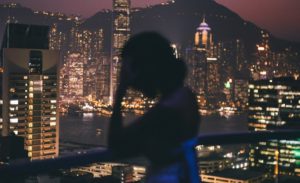
Hong Kong skyline
A view of Hong Kong from Stubbs Road, which connects Happy Valley and The Peak area.
—Jia Guo